NYPD body-camera video can provide a contemporaneous record of the encounter.
Civil rights / police misconduct
Injured by the NYPD? Serious police-misconduct cases require immediate investigation.
Deliso Law evaluates serious injury matters arising from alleged excessive force, violent takedowns, striking, Taser use, police shootings, handcuff injuries, false arrest, and related police conduct. An arrest or stop does not automatically make the force lawful or unlawful—the circumstances and the evidence matter.
The governing question
Was the force objectively reasonable under the circumstances?
In Graham v. Connor, the U.S. Supreme Court held that excessive-force claims arising during an arrest, investigatory stop, or other seizure are evaluated under the Fourth Amendment's objective-reasonableness standard.
Important circumstances can include the seriousness of the suspected offense, whether the person posed an immediate threat, whether the person was resisting or attempting to flee, the amount and type of force used, and what happened after the person was under control.
Read Graham v. Connor at Cornell Legal Information Institute ↗Questions we investigate
- Was force used after the person was restrained or handcuffed?
- Do body-camera recordings match the officers' written reports?
- Were punches, kicks, a Taser, baton, chokehold, or takedown used?
- Was there an immediate threat to officers or others?
- What do the medical records and imaging show?
- What happened to the underlying criminal charges?
Evidence
The video may already exist.
NYPD's public body-worn-camera guidance says officers must record specified events including uses of force, arrests, searches, and interactions with people suspected of criminal activity. The Department states that recordings are generally retained for 18 months, with significant incidents retained longer.
Stores, buildings, traffic locations, witnesses, and bystanders may have additional recordings.
Ambulance, emergency-room, imaging, surgical, orthopedic, neurologic, and scar evidence can document injury and mechanism.
Arrest paperwork, criminal-court files, use-of-force materials, radio transmissions, and other records may become important.
Deadlines
Do not assume every claim has the same deadline.
Certain New York state-law claims against New York City may require service of a Notice of Claim within 90 days. Federal civil-rights claims under 42 U.S.C. § 1983 operate under different rules. The correct deadlines depend on the legal theories, defendants, and facts.
Prompt review matters because a single police encounter can potentially involve different claims with different procedural requirements.
NYC public data
Police-action claims are a significant part of New York City's civil justice system.
Official statistics do not establish misconduct in any individual incident. They do show the scale of complaints and claims that require investigation and adjudication.
Source: NYC Comptroller, A Blueprint for Department-Wide Restraint ↗. These figures concern categories of complaints, claims, and settlements and do not establish liability in any particular case.
Serious injury proof
The constitutional question and the medical evidence have to fit together.
A serious police-force case may require careful development of both what happened during the encounter and what physical harm followed. Medical proof can include fractures, surgery, traumatic brain injury, neurologic injury, shoulder or spine injury, scarring, dental injury, and other significant harm.
Deliso Law's personal-injury practice emphasizes medical records, diagnostic imaging, causation, functional limitations, and damages. That experience can be particularly important when the claimed constitutional violation also produced substantial physical injury.
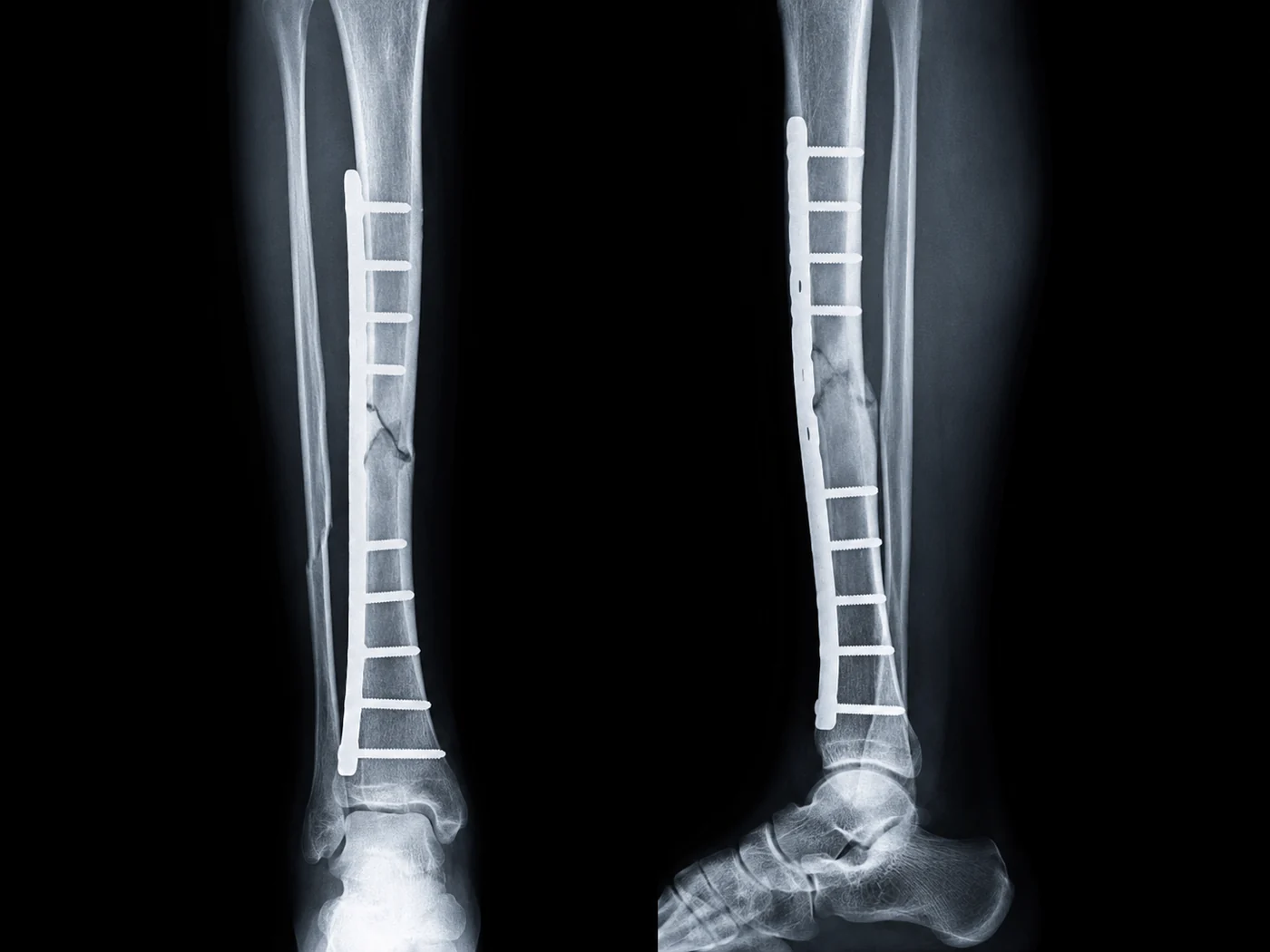 Medical imagery is shown for general educational context and is not presented as evidence from a particular police-misconduct case.
Who is Altman Deliso?
When a police-misconduct case requires more than one perspective.
Serious police-brutality and excessive-force cases can involve criminal procedure, constitutional law, medical causation, serious injury, and damages. For appropriate civil-rights matters, Joseph Deliso may work with veteran criminal-defense trial attorney Aaron Altman so both the police encounter and the resulting injury can be evaluated together.
Altman Deliso is the name being considered for this focused civil-rights collaboration. The concept brings together Aaron Altman’s experience with arrests, police encounters, criminal procedure, and courtroom advocacy with Joseph Deliso’s experience in serious-injury litigation, medical proof, causation, damages, and trial preparation.
Why the combination matters: the criminal-court record and officers’ account may help explain what happened, while video, witnesses, medical records, diagnostic imaging, and injury evidence help establish what force was used and what harm followed.
Arrest circumstances, police testimony, criminal procedure, underlying charges, and courtroom strategy.
Medical proof, causation, damages, serious-injury litigation, and trial preparation.
Altman Deliso is presented here as a proposed focused collaboration, not as a presently established separate law firm. Any association of counsel and attorney-client relationship would be confirmed in writing. If the Altman Deliso civil-rights practice is formally established, this section can link directly to that practice and its dedicated civil-rights pages.
Civil-rights questions
Questions people often ask after a police encounter.
These are general answers, not legal advice. The facts, criminal case, parties, injuries, and deadlines can materially change the analysis.
Can excessive force be unlawful even if the arrest itself was lawful?
Yes. The legality of an arrest and the objective reasonableness of the amount of force used are distinct questions. The force analysis depends on the circumstances confronting the officers.
What if criminal charges are still pending?
A civil-rights evaluation should be coordinated carefully with the defense of any pending criminal matter. Avoid public statements about the incident and tell civil counsel immediately about all pending charges and court dates.
What if the officer's body camera was off?
The absence of body-camera footage does not necessarily end the inquiry. Surveillance video, phone video, witnesses, photographs, medical proof, radio or dispatch records, police paperwork, and other evidence may still be important.
Can body-worn camera footage be requested?
NYPD's public guidance provides a Freedom of Information Law process for requesting body-camera video. Other litigation or criminal-case procedures may also be relevant depending on the circumstances.
What should I do immediately after an incident?
Obtain appropriate medical care, photograph injuries over time, preserve clothing and documents, identify witnesses and nearby cameras, save all criminal-court paperwork, and seek prompt legal advice regarding deadlines and evidence preservation.
Authoritative sources
Read the underlying rules and public information.
Free case review
Tell us what happened.
If you or a family member suffered a serious injury during an NYPD encounter, Deliso Law can review the circumstances, injuries, evidence, and potential next steps.